


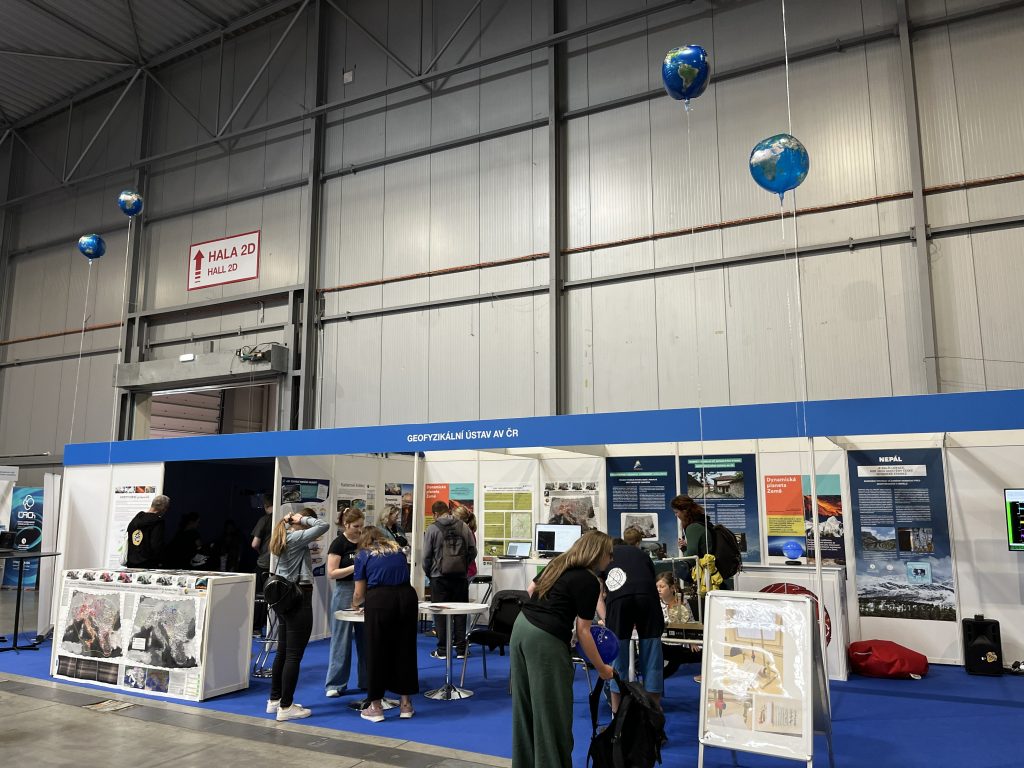
The Science Fair is the largest popular science event organized by the Czech Academy of Sciences since 2015. The 2026 edition took place at the PVA Expo Prague Letňany exhibition center from Thursday, June 4, to Saturday, June 6, 2026. Admission was free of charge.
More than 100 exhibits were on display, including presentations from 40 institutes of the Czech Academy of Sciences, universities, other research institutions, and companies. Once again, the fair attracted tens of thousands of visitors—from school groups and families with children to anyone interested in the latest scientific discoveries.
Visitors had a unique opportunity to meet scientists in person, gain insight into their work, and try a wide range of experiments firsthand.
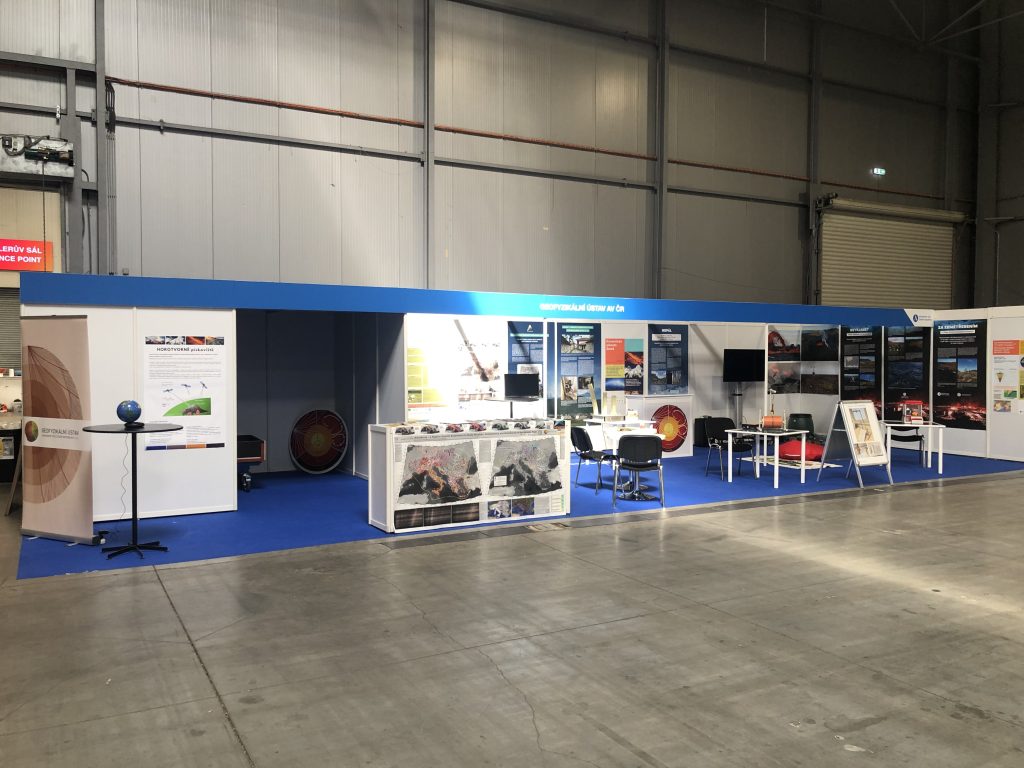
Our exhibit, titled “Gradual and Sudden Changes,” was divided into several interactive stations:
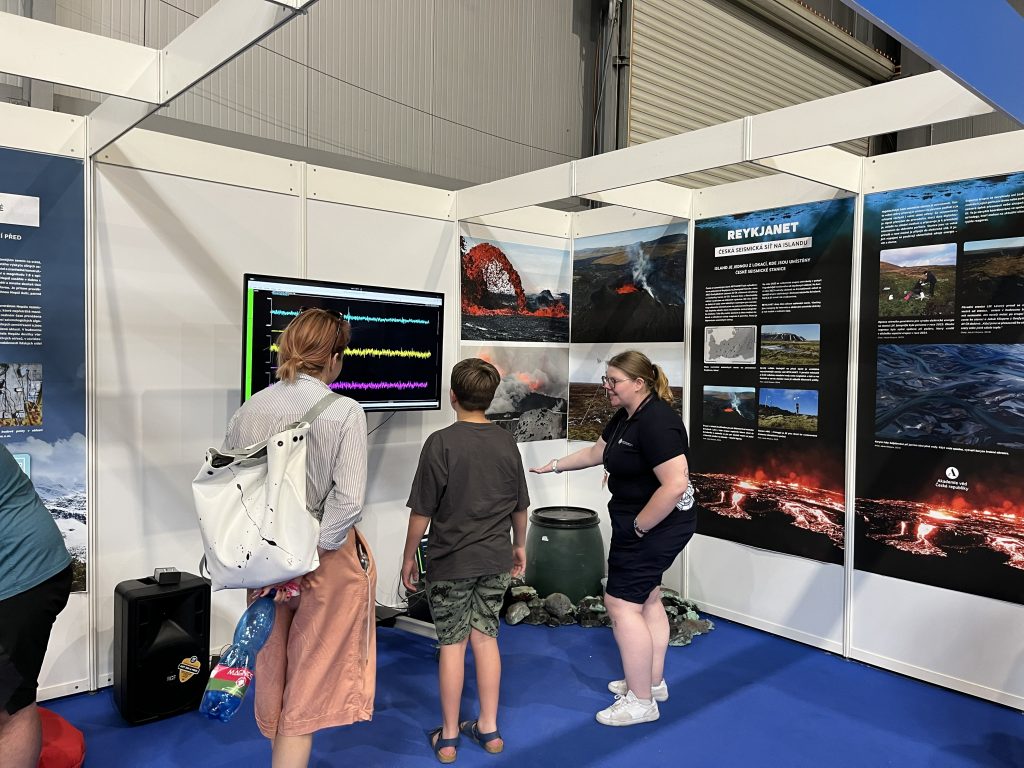
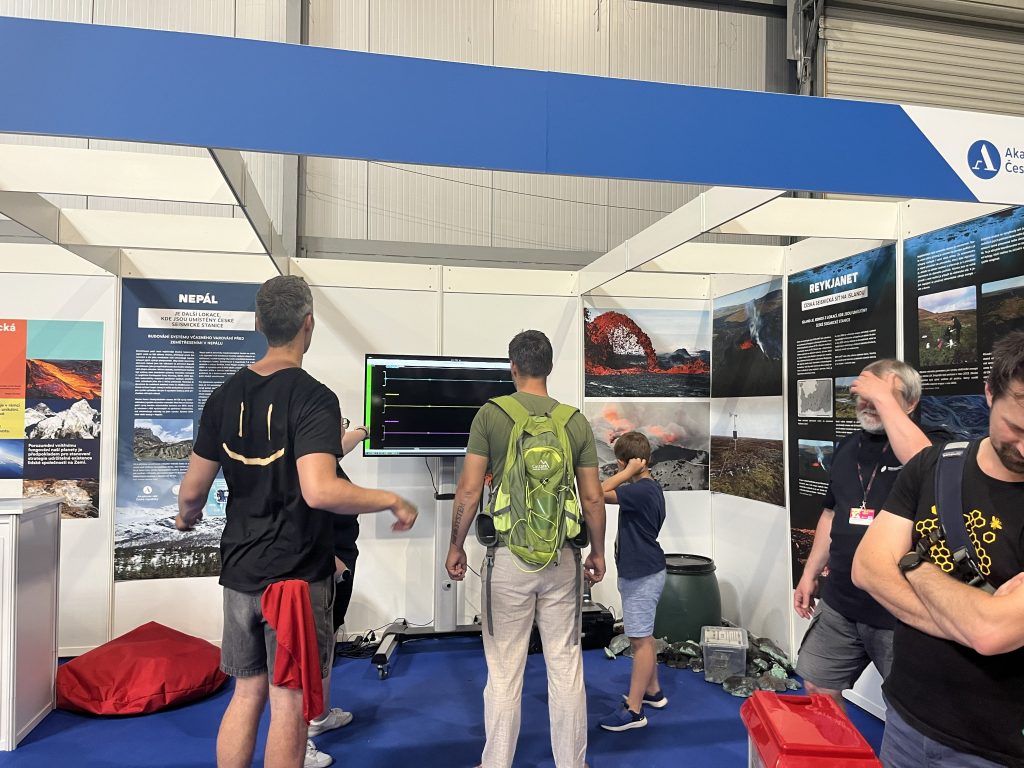
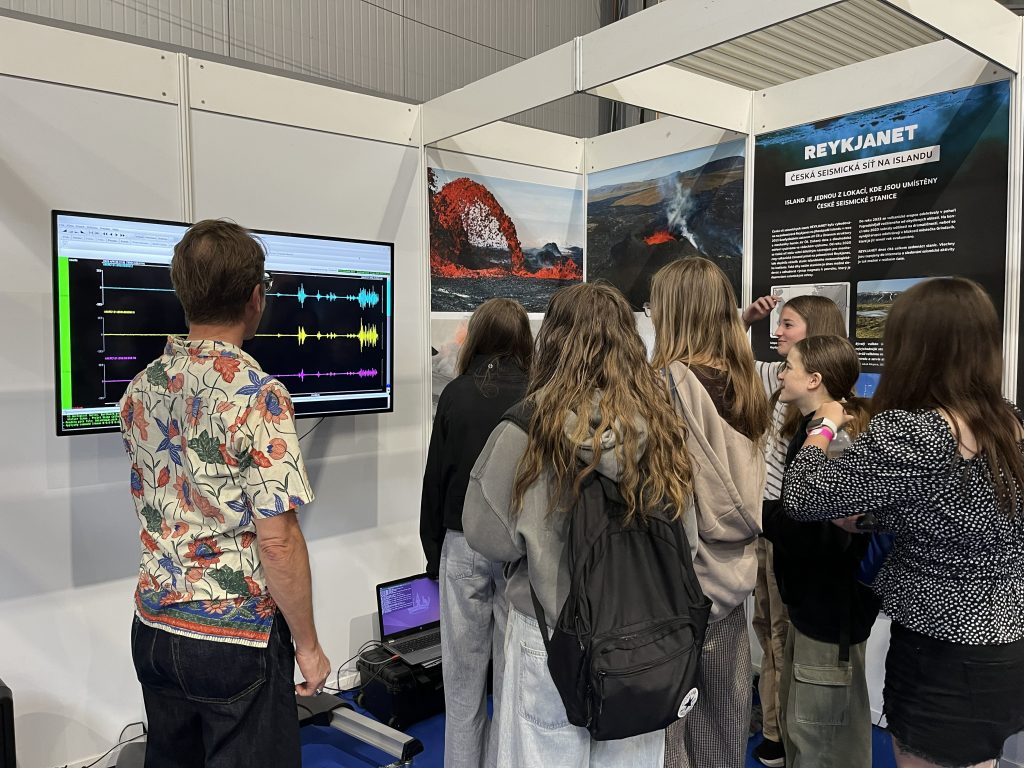
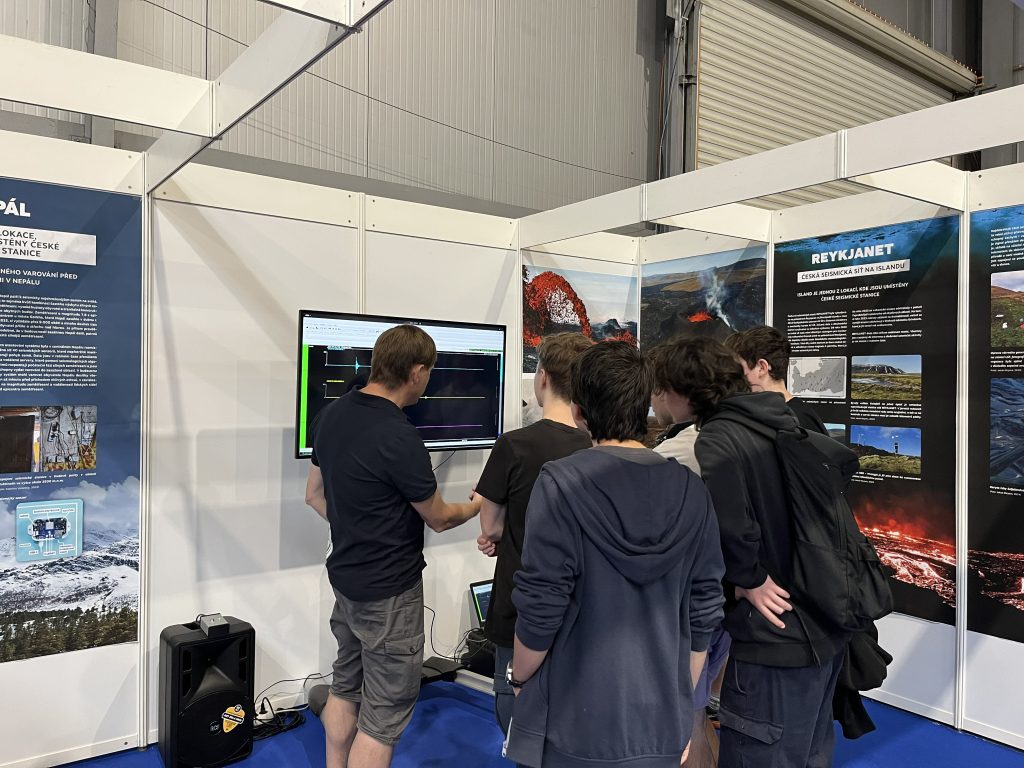
Create Your Own Earthquake
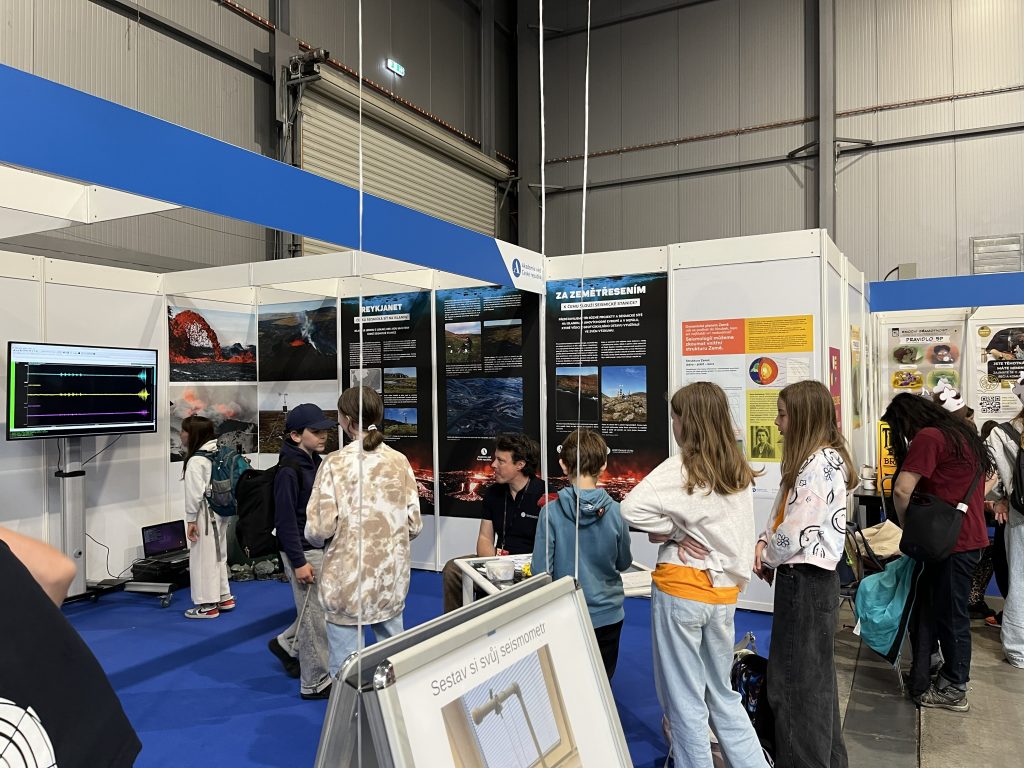
During an earthquake, we can feel the ground moving beneath our feet, buildings shaking, and often hear rumbling sounds. At this station, a real seismic station was installed. Visitors could stomp on the ground and observe how these highly sensitive instruments detect and record vibrations.
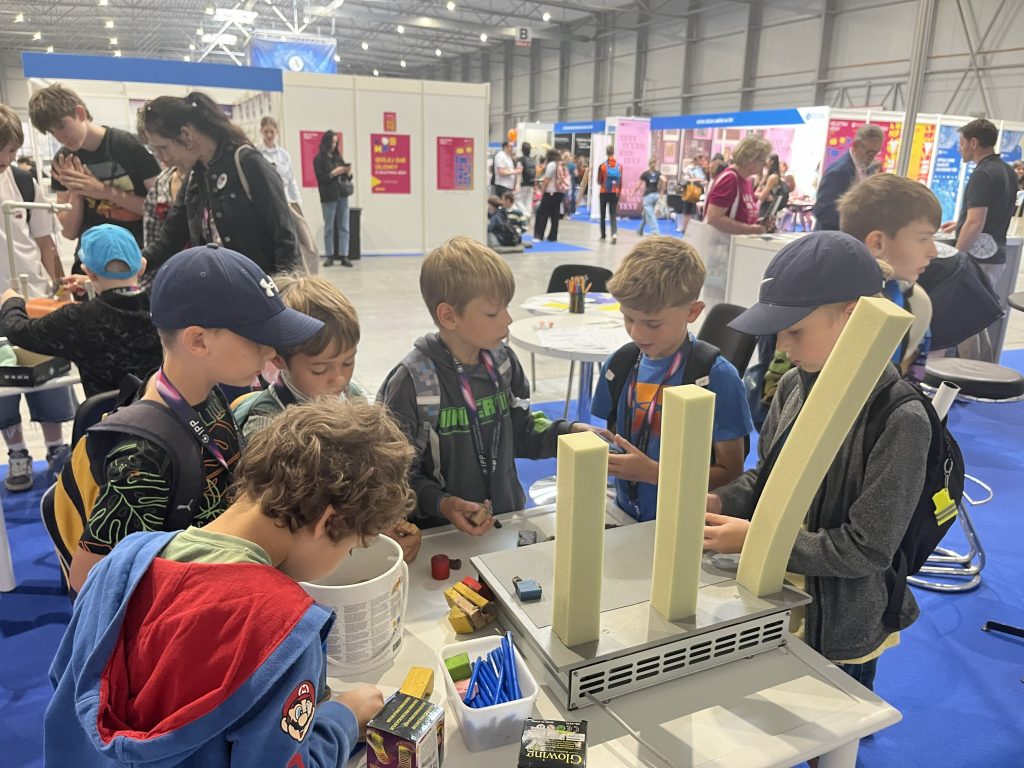
Shake Table
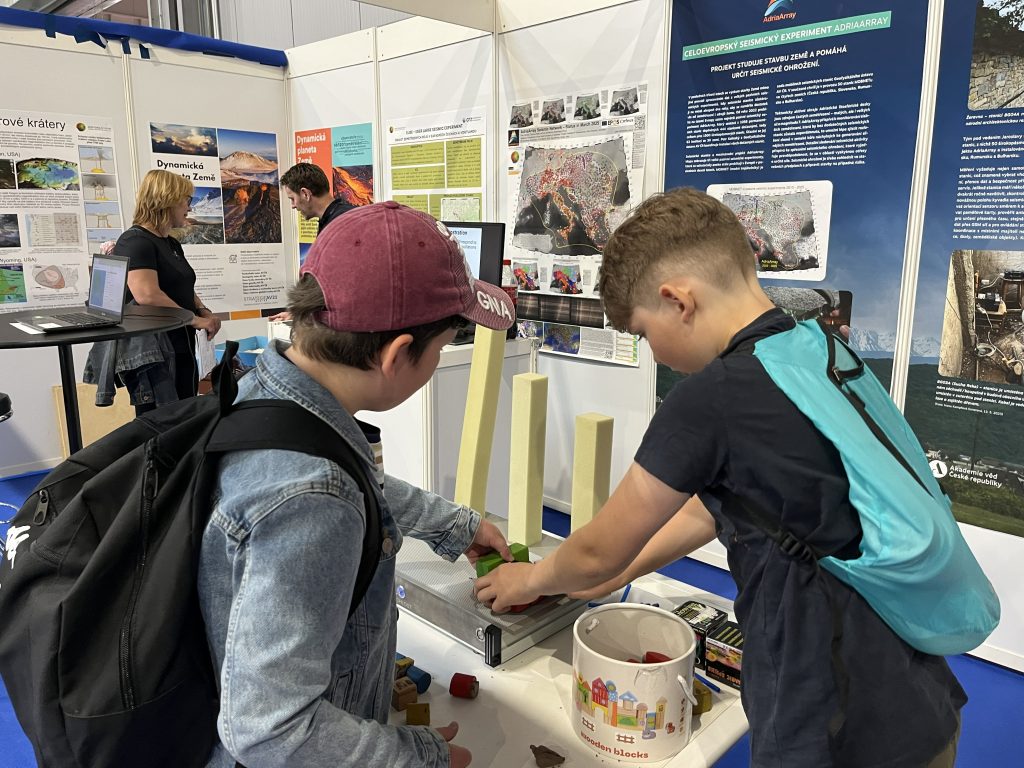
A shake table (or seismic vibration table) is a device used in research and engineering to simulate the effects of earthquakes on various structures. It reproduces the movements that occur during real earthquakes, allowing researchers to test and evaluate the resistance of buildings, bridges, infrastructure, and other structures to seismic waves.
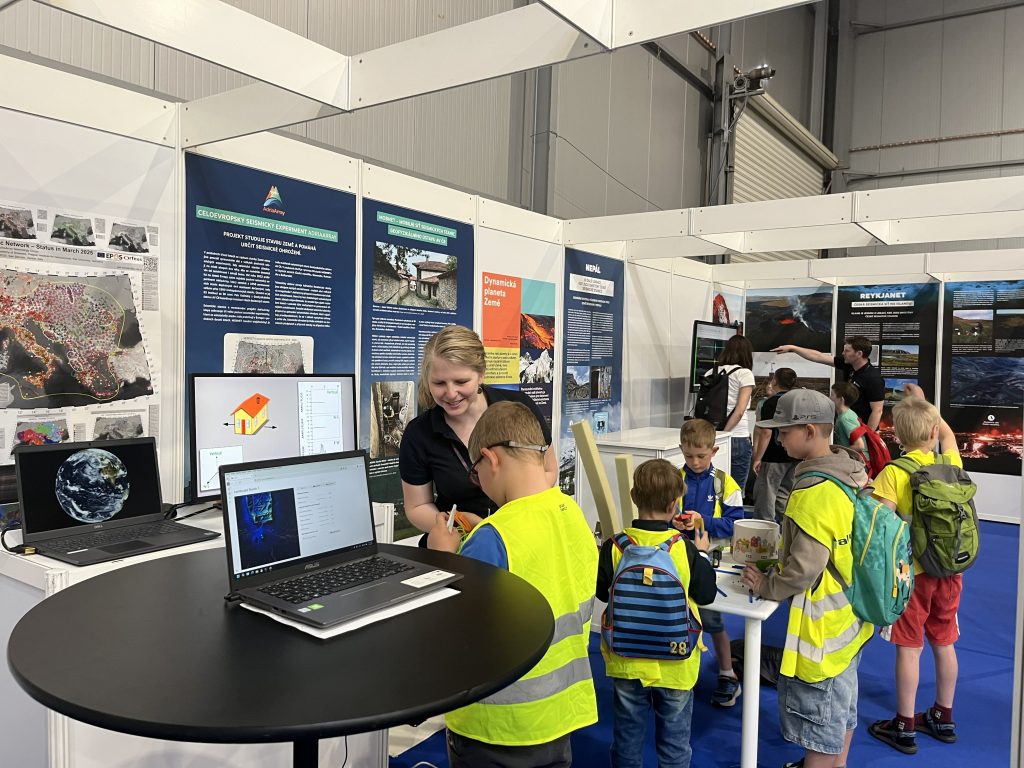
Children and adults alike could build their own structures and test whether they could withstand simulated earthquake shaking.
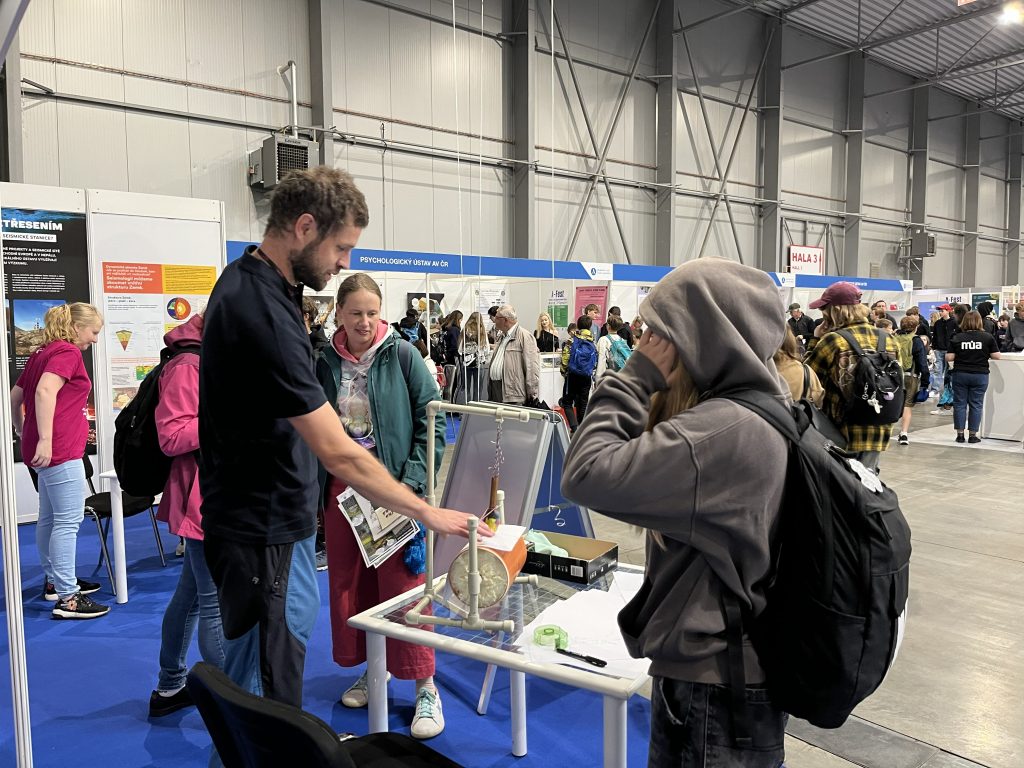
Build Your Own Seismometer
We demonstrated how seismometers work in a simple and engaging way. Visitors tested a prototype of a basic seismometer and could take home a recording of their own “earthquake”—a personal seismogram.
Volcano and Caldera Formation Model
Using a model of an “inflatable” flour volcano, we demonstrated the processes that occur as magma rises toward the surface. We also showed how a caldera forms when the summit of a volcano collapses into an emptied magma chamber.
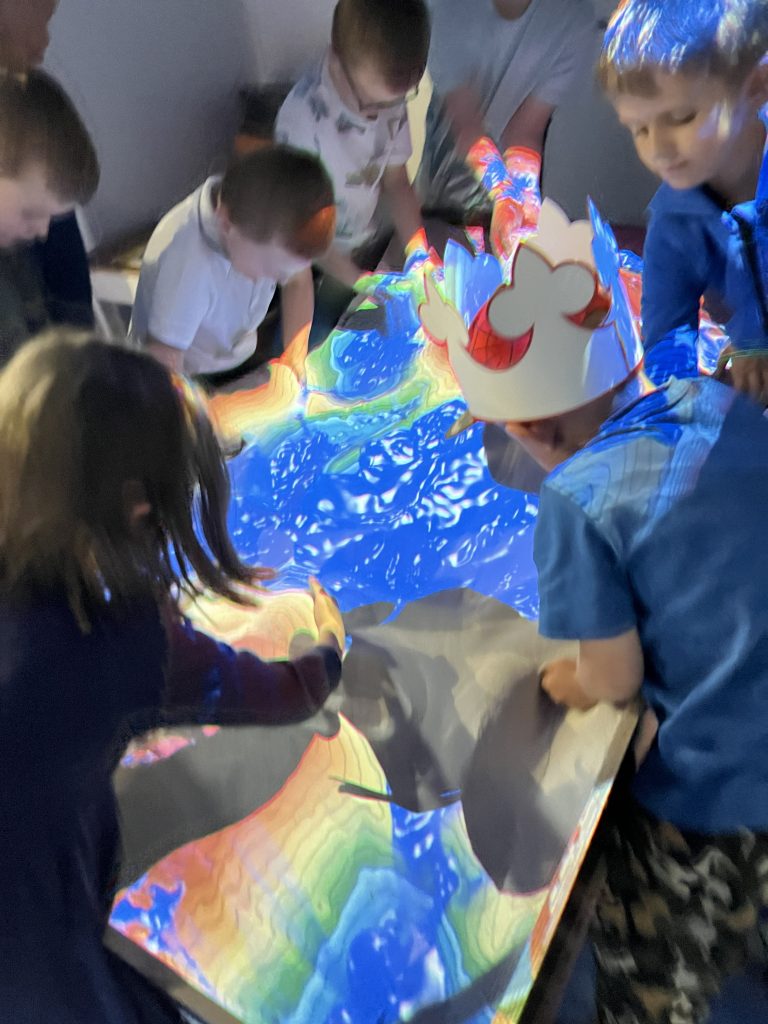
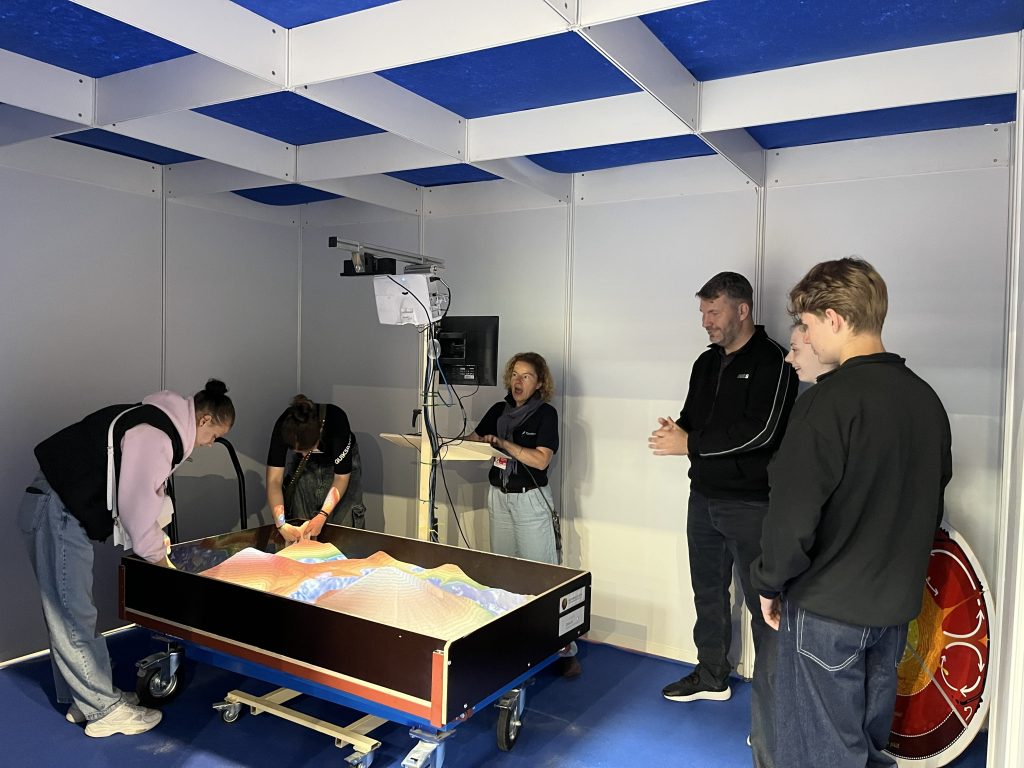
Interactive Sandbox
The Augmented Reality Sandbox is a sandbox equipped with a projector and 3D sensors (Kinect technology). Visitors could create their own landscapes in sand and watch changes projected onto them in real time.
Earth’s surface is a dynamic environment shaped by mountain-building processes, erosion, sedimentation, river systems, and human activity. Visitors became world-builders, experimenting with different landscapes
and conditions—from mountain ranges to river valleys. The projection system and 3D sensors allowed the terrain to change instantly in response to their modifications.
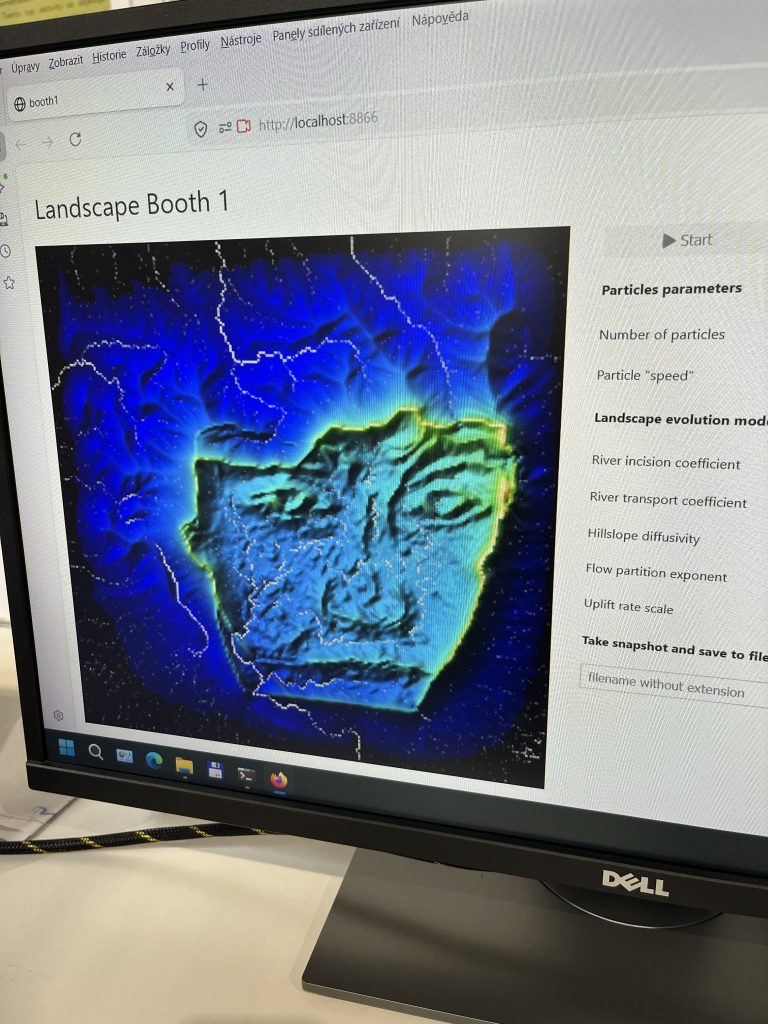
Your Face as a 3D Map
The “Face Topography” program playfully demonstrates how geomorphologists use computational tools today. A camera captures the contours and movements of a visitor’s face, and the computer uses shading to define lower areas (darker tones) and higher areas (lighter tones), transforming the face into a topographic map.
Various parameters can be adjusted to simulate the effects of climate, tectonics, and geological structures, similar to methods used in Earth surface research.
Overview of Research Areas
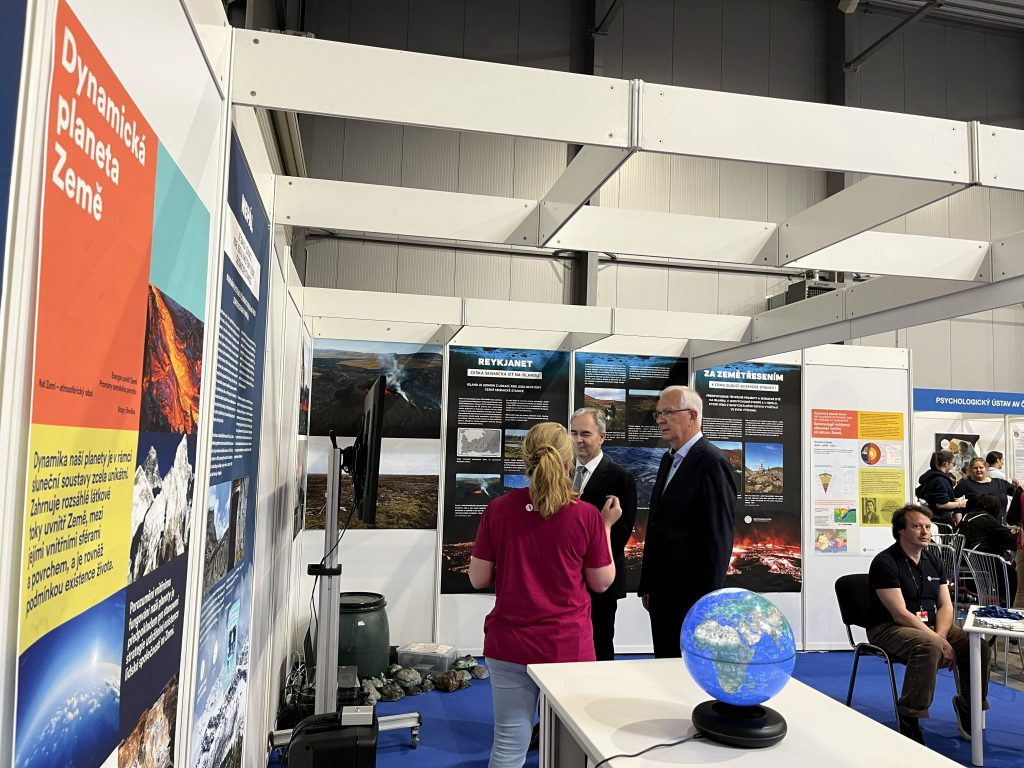
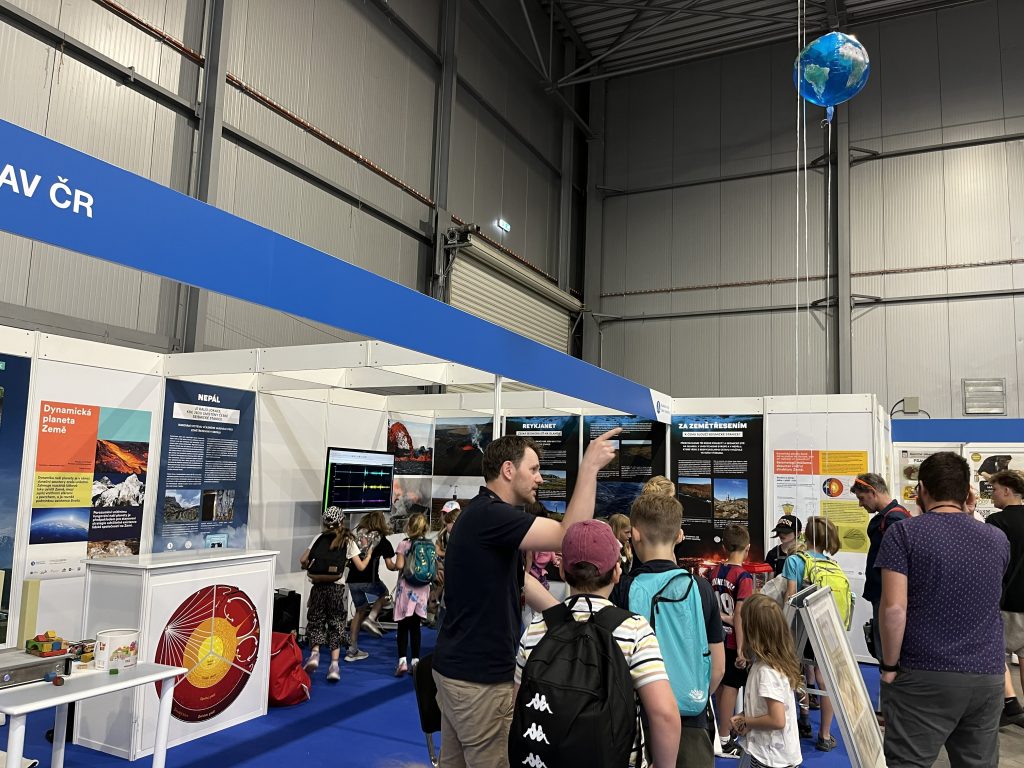
The exhibit of the Geophysical Institute was complemented by posters featuring maps, images, and explanatory texts showing the wide range of locations where GFÚ seismologists work.
We presented our participation in the AdriaArray project, including stations in Slovakia, Romania, and Bulgaria, the development of an earthquake early-warning system in Nepal, and the Reykjanet seismic network in Iceland.
We would like to sincerely thank everyone who contributed their energy, enthusiasm, and dedication to both the preparation and operation of the Science Fair, helping to bring science closer to the public: Petr Brož, Jana Doubravová, Caroline Fenske, Hana Grison, Hana Kampfová Exnerová, Radek Klanica, Jakub Klicpera, Diana Konrádová, Radek Kubečka, Jiří Kvapil, Jan Michálek, Marcela Švamberková, Luděk Vecsey, Roman Werenyckyj, Prokop Závada, and Jan Zedník.
On behalf of the organizing team,
Lucie Crippa and Petr Kolínský

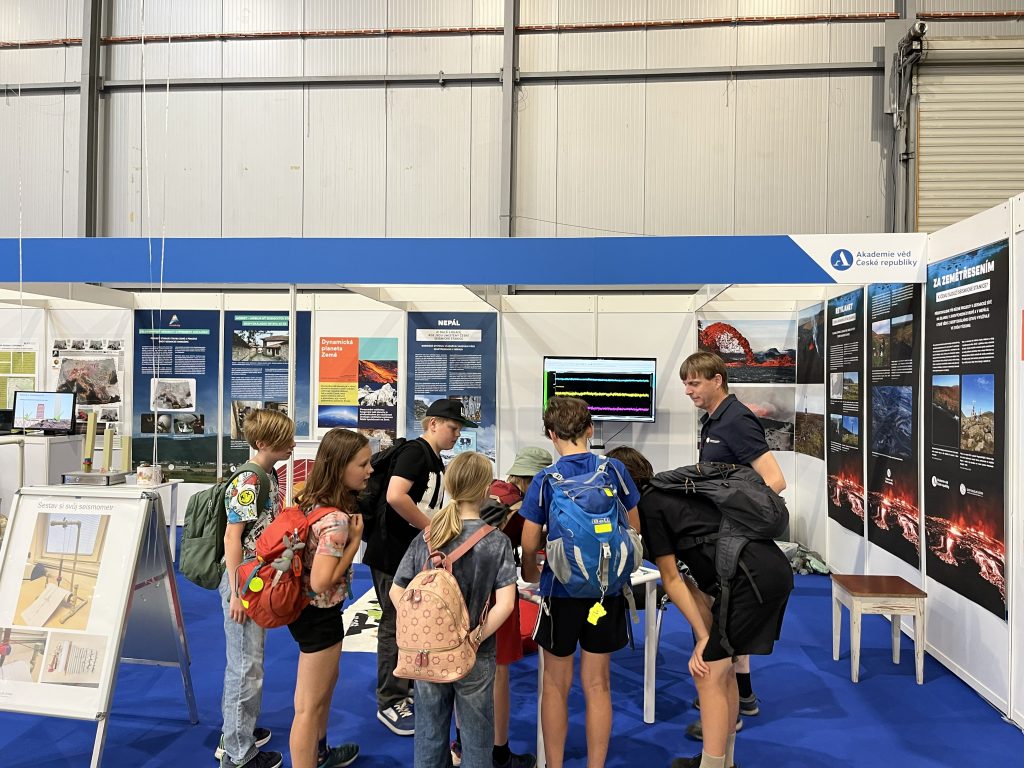
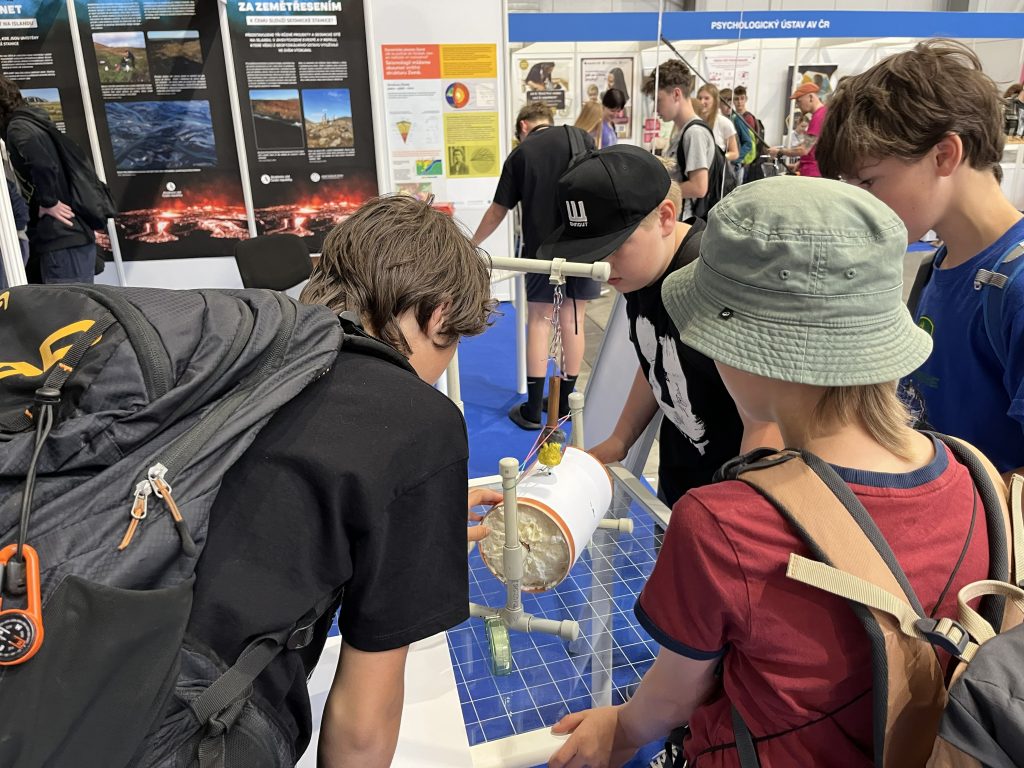
Photos: Lucie Crippa (GFÚ) a Petr Kolínský (GFÚ)